A City Through Children’s Eyes
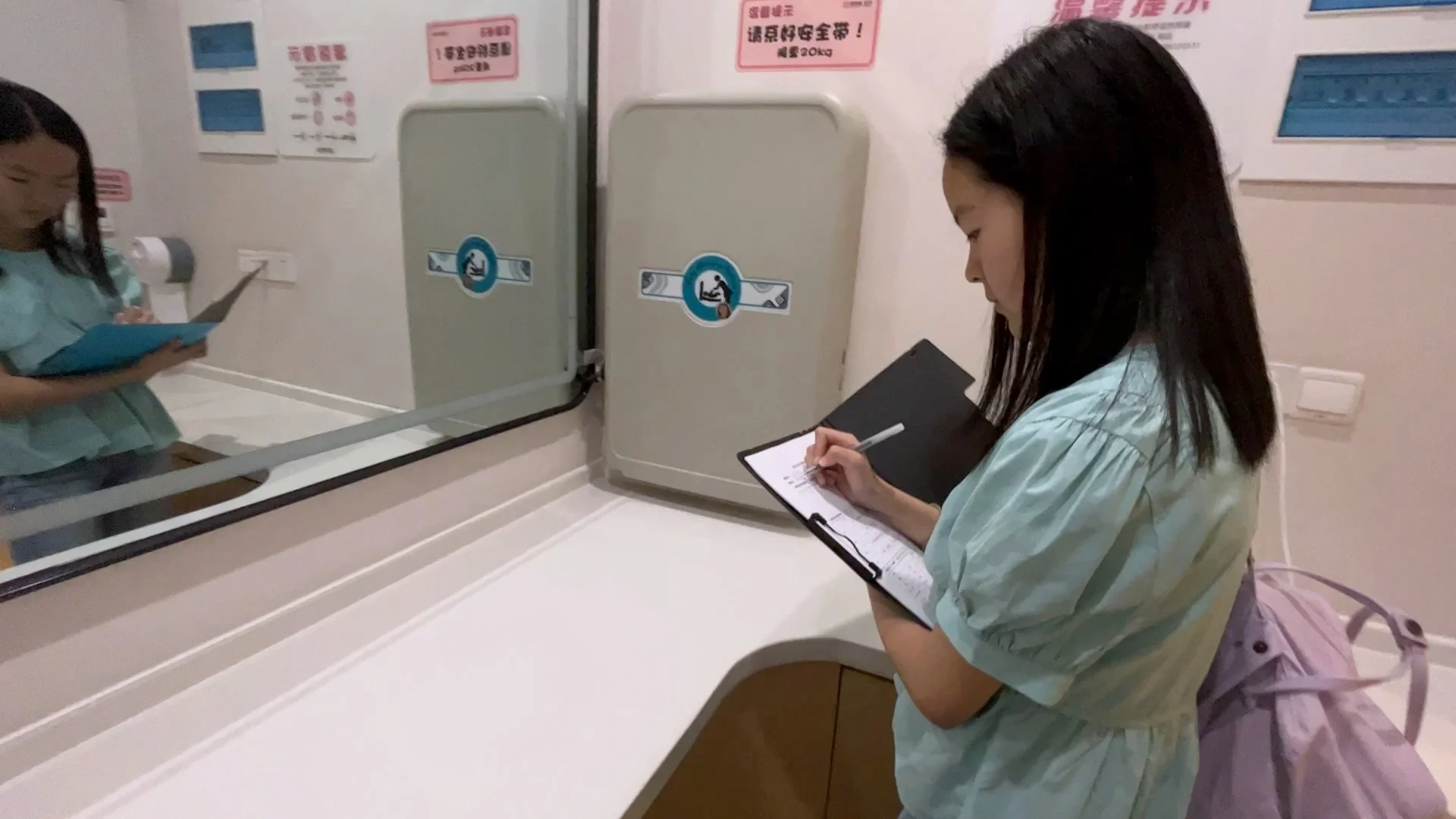
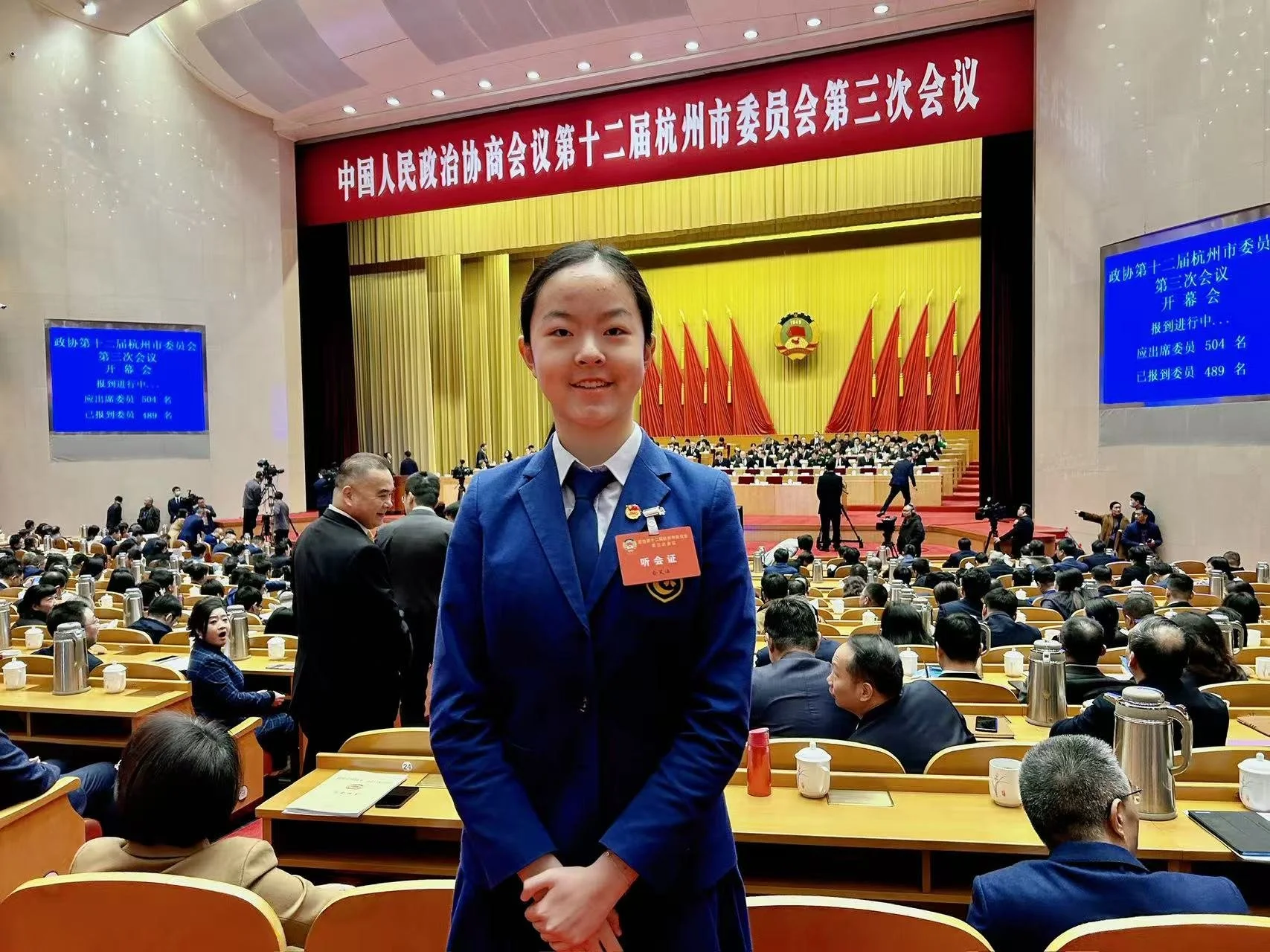
As the leader of the Hangzhou Children’s Observation Group, I initiated a research and advocacy project examining how public nursing rooms could better serve infants, parents, and caregivers. Our team developed a set of evidence-based policy recommendations that were brought into Hangzhou’s civic consultation process around the Two Sessions, creating an opportunity for our findings to inform real improvements in public family facilities.
1,232
Survey responses from parents of children aged 0–3
10+
Public transportation facilities studied in China and abroad
32
Field-research person-visits

Problems we found
During our field research, we compared nursing rooms in more than 10 public transportation facilities in China and abroad, checked their equipment against formal construction and management standards, and evaluated the spaces through visual, auditory, tactile, and olfactory observation.
Facilities Did Not Reflect Real Family Needs
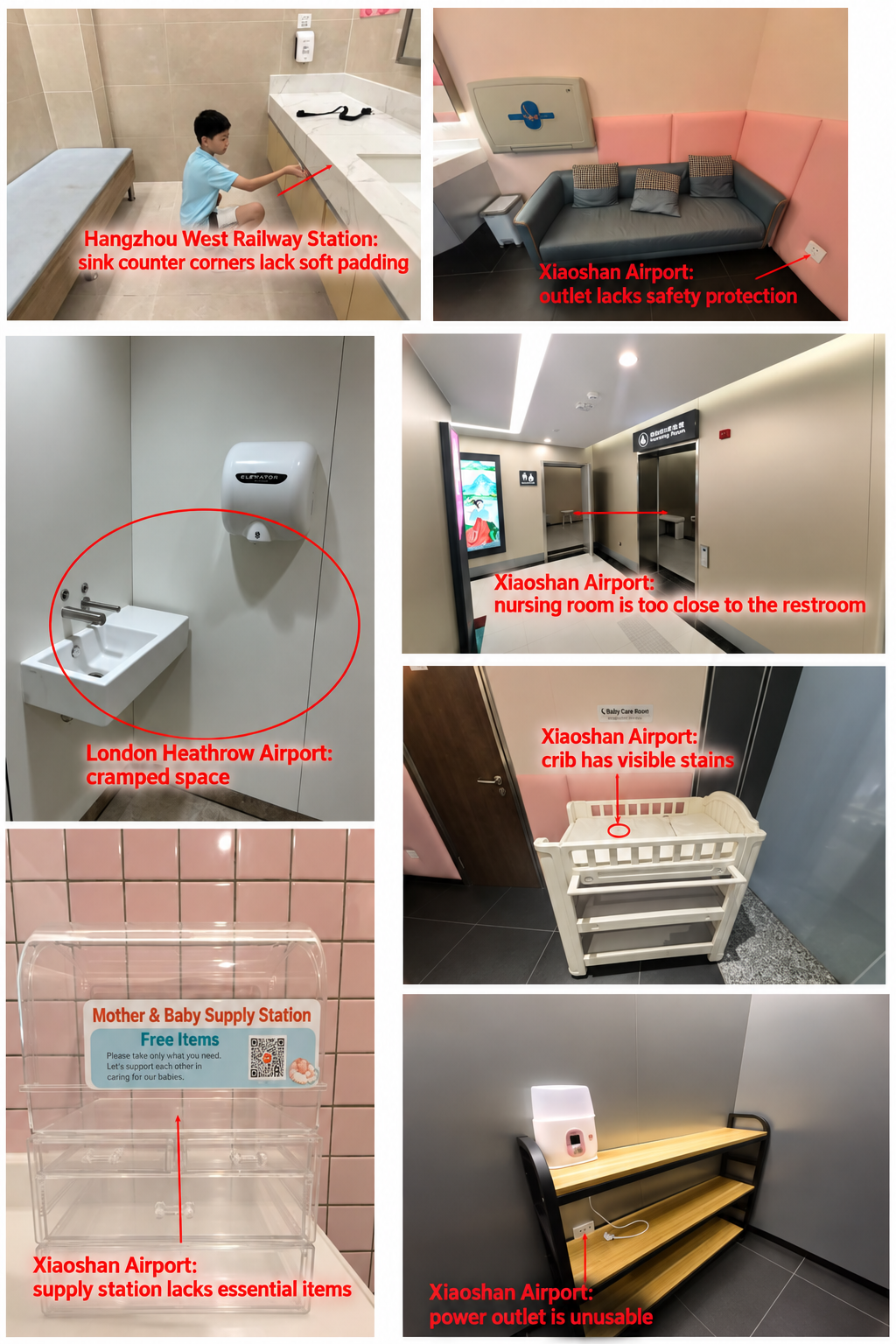
Although basic nursing and washing facilities were generally available, many rooms lacked equipment such as supportive feeding chairs, drinking-water facilities, bottle sterilizers, heating equipment, disposable baby supplies, and spaces suitable for families with multiple children.
Difficult to Find
Only 55.42% of surveyed users said nursing rooms were easy or relatively easy to locate. Among those who experienced difficulty, 84.87% cited insufficient numbers, 67.32% hidden locations, and 44.54% unclear signage.
Cleanliness and Location
Some rooms were located too close to restrooms or smoking areas, while poor ventilation, dirty changing tables, uncovered waste bins, and insufficient cleaning reduced users’ comfort.
Privacy and Safety
Parents reported concerns including a lack of lockable breastfeeding spaces and “occupied” signs, while some facilities lacked protected electrical outlets, changing-table restraints, padded corners, or emergency call buttons.
Solutions We Proposed
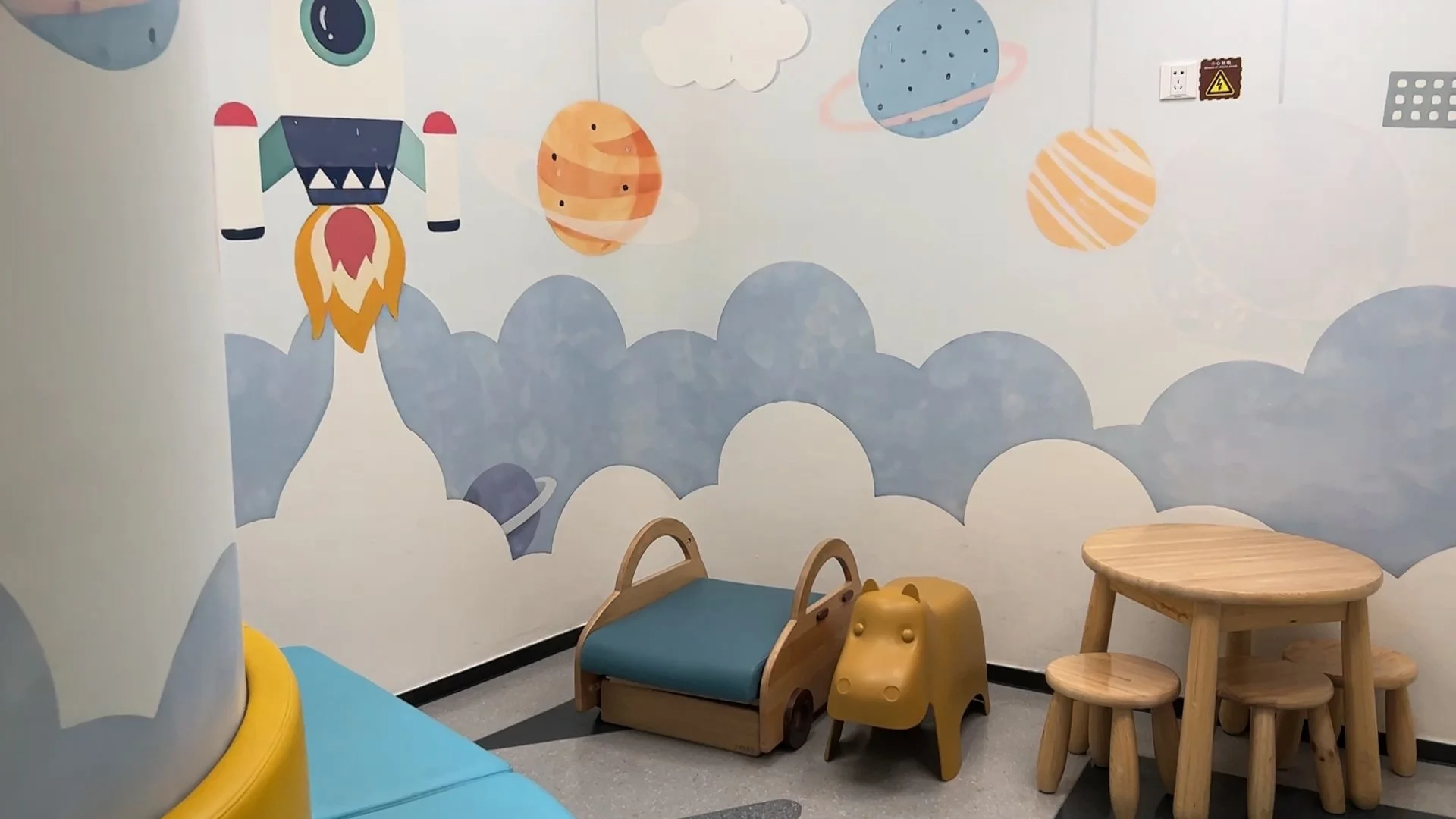
Our proposal focused not simply on building more nursing rooms, but on improving how they are located, designed, equipped, and managed. The goal was to move public nursing rooms from simply being available to being genuinely usable for families.
Make Nursing Rooms Easier to Find
Increase coverage in major public spaces, improve continuous directional signage, introduce mobile nursing rooms where permanent construction is difficult, and develop digital navigation tools that help parents locate the nearest facility.
Separate Privacy From Shared Caregiving
Place washing, food preparation, and resting areas in shared spaces so fathers and other caregivers can participate, while keeping breastfeeding areas private, lockable, and clearly marked as occupied. Child-safe flooring, padded corners, barriers, and secure cribs should also be incorporated into the design.
Provide Equipment Families Actually Need
Add drinking-water dispensers, food-heating equipment, hand sanitizer, bottle sterilization facilities, and vending machines offering diapers, wipes, disposable pads, formula, and bottles.
Improve Everyday Management
Establish clearer cleaning responsibilities and schedules, keep surfaces and floors free of stains, use covered waste bins, regularly wash fabric furnishings, and improve ventilation in facilities located near restrooms or smoking areas.