Rethinking Food Safety for African Children
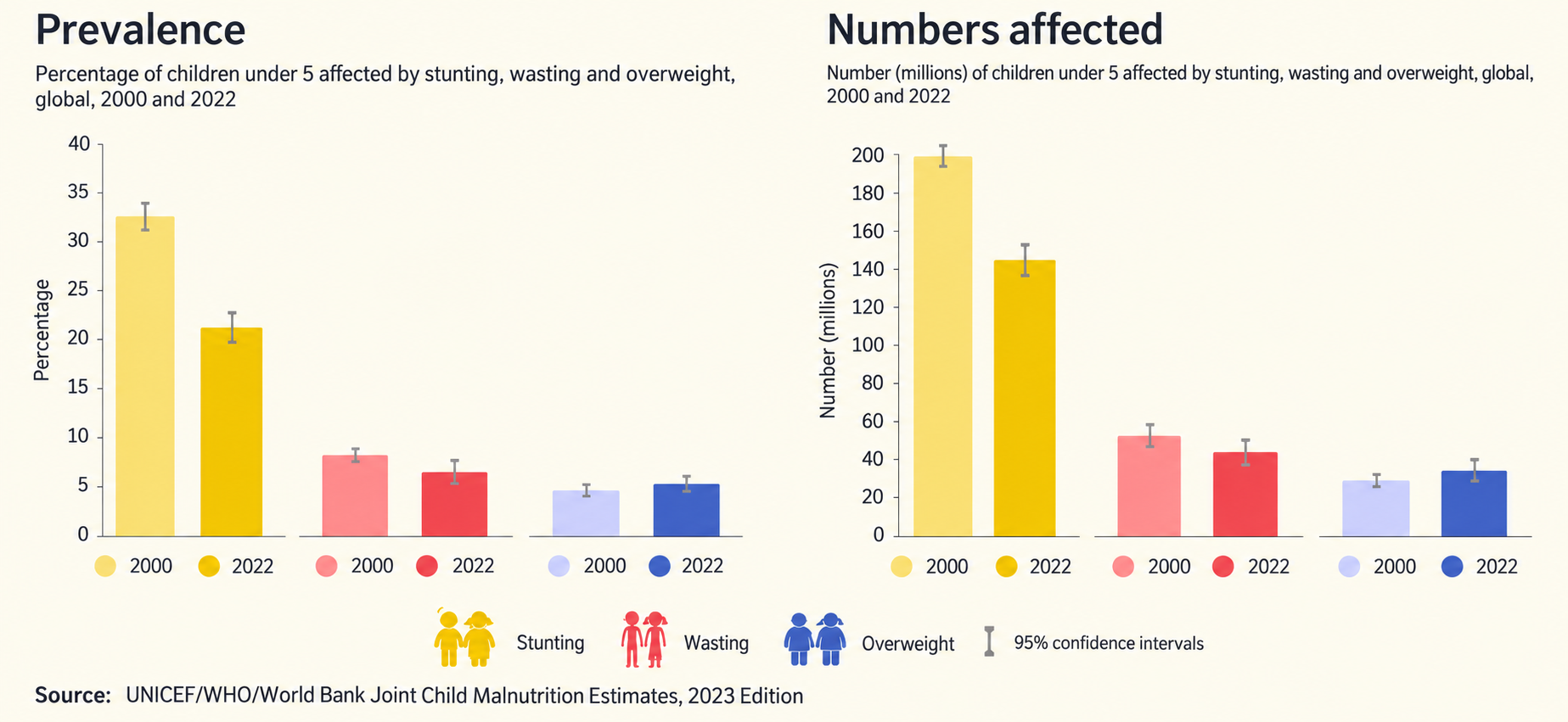
As part of the UNYTP, I developed an SDG 3 policy proposal examining two interconnected threats to children’s health in Africa: malnutrition and accidental ingestion. I studied how poverty, education, healthcare access, childcare, and the regulation of hazardous substances can shape a child’s risk. My research combined UN and UNICEF data, medical literature, case studies from Nigeria, Uganda, and Mali, and an interview with a physician who had worked in Mali. From these findings, I developed six recommendations across the food, education, and public-management systems.
Child Food Safety Is More Than Nutrition
I began with malnutrition, but the research led me to a broader understanding of food safety. For young children, health risks can also come from accidentally swallowing or inhaling foreign objects and ingesting hazardous chemicals. Looking at cases from Nigeria, Uganda, and Mali showed me that these incidents were rarely isolated accidents: they were connected to broader conditions such as limited parental supervision, gaps in basic health education, poverty, inadequate access to specialized medical care, and unsafe storage or labeling of potentially dangerous substances.
Nigeria:
I examined pediatric airway foreign-body cases treated by a Chinese medical team, where children had inhaled or swallowed objects such as beads, beans, pins, and small stones. I focused on how limited supervision, delayed treatment, and shortages in specialized medical care could make these accidents far more dangerous.
Malnutrition
Accidental Ingestion
To understand how these risks appear in clinical practice, I interviewed a gastroenterologist who had worked in Mali from April 2022 to December 2023. He described treating children with caustic esophageal injuries caused by accidental chemical ingestion and discussed how poverty, limited diagnostic equipment, low educational access, and shortages of medical supplies shaped treatment outcomes.
Uganda:
I studied cases of children who accidentally swallowed coins that became lodged in the esophagus. Some children waited days or even months before receiving treatment, showing me how limited medical access could turn a manageable accident into a serious health risk.
What I proposed
Food System:
Improve access to nutritious food
Increase the availability and distribution of basic nutritious foods so children can receive a more balanced diet.
Provide free school meals
Use school lunch programs, potentially supported through cooperation between governments and international organizations, to guarantee children at least one nutritious meal each school day.
Management System:
Create safer care for preschool children
Develop supervised childcare options for families who cannot consistently provide daytime supervision.
Control access to hazardous chemicals
Strengthen regulation, storage, labeling, and child-friendly warnings for substances such as pesticides, insecticides, and paints.
Education System:
Expand basic health and food-safety education
Teach children how food enters the body, why foreign-object ingestion is dangerous, and how to recognize unsafe substances using accessible methods such as visual demonstrations and drama.
Educate parents as well as children
Provide parents with practical information on nutrition, food safety, first aid, and when medical treatment is urgently needed.